Thursday, February 7, 2008

How did women vote on Tuesday?


AAUW DIAlog is the brand new blog brought to you by the AAUW staff at National. I encourage you to take a look. Here are some interesting stats from DIAlog blogger Seth Chase's post on Super Duper Tuesday.

  • Women were more likely to vote Democratic than men, who were more likely to vote Republican.
  • 80% of African American women voted for Barack Obama.
  • 64% of Latinas voted for Hillary Clinton.
  • 59% of white women voted for Hillary Clinton.
  • Women over 60 were most likely to vote for Clinton (55%).
  • John McCain held a small lead over Mitt Romney among women voters.
You can read the headlines for their posts in our sidebar. And you can subscribe to their updates via email or RSS feed. Pay them a visit and welcome them to the 'blogosphere.'

Goldberg Piece On Display Through Today (Thursday)


Bad weather kept many of us away from the opening reception at Bard, last Friday, but here's a photo of Doris Goldberg's piece "Danger Alert for the Hudson River." You can read about Doris' creative process here.

This piece was assembled for the "Focus the Nation" teach-in held on college campuses across the country last week to address climate change.
Photo by Jane Sunshine

Tuesday, February 5, 2008

The Bluest Eye - Book Club Feb 19th


Tuesday, February 19th, 1pm, at the Kingston Library.

Updated 2/5/08
The Bluest Eye
by Toni Morrison. This is Ms. Morrison's first novel -- the story of an 11 year old girl named Pecola Breedlove who prays for blue eyes so she will be as "loved as all blue-eyed, blonde children are loved in America."

Written in 1970, this is Ms. Morrison's first book.

In my 1994 edition there is her Afterword, in which she explains where she got the idea for the story, why she included certain things, and how she found it difficult to find the right female voice for parts of this story. She says she "attempts to transfigure the complexity and wealth of Black-American culture into a language worthy of the culture."(page 216)

There are many characters, each illustrating a different facet of black identity which can help the reader become more understanding of the culture.

I plan to show a short film (18 minutes) called, The Psychological Residuals of Slavery. I have shown this before but each time you see this you remember some different aspect and it is well worth our time in Black History Month.

From,
Marjorie Regan,
AAUW Book Club Moderator

This is a Book Club in a Bag choice so you can arrange to pick up a library copy from Marjorie Regan.

1/15/08: literary group tackles Triangle

Update - 2/5/08: Some members have asked about our January meeting.
We discussed Triangle, The Fire That Changed America.
This non-fiction book about an event in NYC in 1911 could be compared to the historical fiction we read in September: Paradise Alley, the book about NYC in 1863 during the Civil War draft riots.

The beginning Labor Movement was helped by the devastation of the fire. The cooperation of women socialites who came to the working areas,Socialists, Immigrants, laborers joined in a common cause effected changes. Most important, though was one, young, immigrant, working girl who was beaten by thugs hired by management. She still gave lectures on the necessity of workers organizing themselves.
From, Marjorie Regan,
AAUW Book Club Moderator

******

The next monthly meeting of the literary group will be held on Tuesday, January 15 at 1 PM, upstairs at the Kingston Library at 55 Franklin Street. We'll discuss Triangle: The Fire That Changed America by Dave von Drehle. Do join us, even if you haven't finished (or read!) the book.

Which Countries Set the Best Examples?


Jeanne Townsend, our Branch International Chair, sent along a link she received from Peggy Kelland, NYS International Affairs Director. Jeanne commented in her request that we post a link, "This references a very interesting paper with lots of statistics that members might find interesting. "
Which Countries Set the Best Examples?: "International political organizations count about 193 countries. Which ones set the best examples to the rest of the world? Which ones would we do best to copy, to emulate and to admire for their foresight, hard work and long-term conscience? Which countries would have humanity survive gleaming into a clean, happy, bright future? Who are tardy on humanitarian issues, science or development?"
The charts provide interesting browsing. For example, on the Gender Equality Scale, the US isn't even listed among the top fifteen countries. We're 29th in Quality of Life, and dropped from second (2004-5) to sixth (2006) in the list of Most Competitive Economies.

Do take a look. And, consider the way each of the indices is constructed. See whether you agree.

Thursday, January 31, 2008

Flash - Update on Kodi Kids

Sent: To Ellen Osgood, Thu, 31 Jan 2008 1:52 pm
From: Christine Dinsmore
Subject: Update on Kodi Kids & Kenya

Dear Friends of the Kodi Kids:

As the violence in Kenya takes center stage, many of you have been asking about the Kodi kids and their safety. I'm happy to report that all the children are safe. Unfortunately, the tainted election and the subsequent bloodshed has not left them untouched. As you know, Valaria and her aunt and cousin who she lives with had to move to another neighborhood. She was also transferred to another school as she was the only Luo in her previous school and the family feared harassment and retaliation. So she has been enrolled in a school of mixed tribal roots. The school year, which began in January, has been disrupted with the session beginning, only to be closed on a pretty regular basis.

The boarding schools of the other children have been more closed than opened. With the country's violence erupting nearly daily, the children are more out of school than in. Additionally, one of their uncles was trapped by a mob in Nairobi and was rescued by police. His home was burnt to the ground. He is safe, however. The Kodi family is understandably distraught about what's happening in Kenya, but have faith that Kofi Annan will mediate the two parties to a positive place. They believe that their homeland will return to its former calm and peaceful state and life will return to normal.

Below is a link to an analysis of what's the underlying cause of the bloodshed. http://www.commondreams.org/archive/2008/01/29/6719/

I'll keep you posted.

Best, Christine Dinsmore
http://www.christinedinsmore.com/kodi_kids.html
La Ășnica lucha que se pierde es la que se abandona. (The only struggle you lose is the one you abandon.)-- Abuelas de Plaza de Mayo

Tuesday, January 29, 2008

The Creative Process - Danger Alert for the Hudson River


We asked Doris Goldberg to tell us about the piece she is exhibiting at "Focus the Nation."


I was inspired to conceive this work after attending John Cronin's class at Bard on the Hudson River and hearing about his experience on the River and with environmental activism. "Danger Alert for the Hudson River" is an 8 by 11 foot hanging assembled for the "Focus the Nation" conference that addresses climate change at Bard College.

I chose to represent the River’s past with photographs taken in the late 1800's primarily by Seneca Roy Stoddard. These photographs show the energy and grace of the River in a former time.

My thoughts distilled into a Haiku-esque statement which I made into a banner:

salt waters pulse north mountain streams cascade south
mighty river flowing both ways

danger alerts as ice caps melt and seas rise flooding
high banks drowning both past and present
calling us to guard, calling to protect the life of
our Hudson, our comfort and joy
mighty river flowing both ways

Native Americans recognized the tidal aspect of the Hudson, calling it the 'river that flows both ways'. We now know that for over 150 miles -- from New York Harbor to the dam at Troy -- the River is tidal. As the ice caps melt and the seas rise -- some estimate over 30 feet by the year 2050 -- there will be dramatic changes as the banks are flooded with sea water.

Mounting the photographs and banner on fish netting, using fabric to suggest mountains, developed into more of a project with thread and needle than I could manage. Jane Sunshine graciously came to my rescue, volunteering her sewing expertise for several days

"Danger Alert for the Hudson River" will be exhibited at the Bertelsman Campus Center at Bard College from Friday, February 1st until Monday, February 4th. Update: the exhibit has been extended through February 7th.

All are welcome to view works on climate change by regional artists. The opening reception will be Friday, February 1st at 6:30-7:30 pm.

Monday, January 28, 2008

Lucien Freud and Alexander Calder - Together Feb. 21st

Join us Thursday, February 21st, 4-5:30 pm, at the Kingston Area Library.

Whether you are going on the Kingston AAUW bus trip to the Museum of Modern Art or not, you are invited to a pre-trip presentation on Lucian Freud, (self-portrait at left), Sigmund's grandson, by Sue Kiok. Sue Kiok is a Woodstock artist and founder of the NY City Arts Mural Workshop.

We will also see PBS's excellent American Masters series of Alexander Calder's Circus.

Come enjoy, all are welcome to this free, public event sponsored by the American Association of University Women.

And, you can learn more about the March 8th trip to the Museum of Modern Art here [link].

For more information please contact, AAUW President Garnette Arledge at aloha.garnette@gmail.com or call 845-702-2120.

The Kodi Family Update - Coping with Violence


At the September branch meeting we heard about the Kodi family in Miyuga, Kenya. Many in our community, including the branch, contribute to the children's education, so the violence in that part of the world takes on a personal note for us.

Ellen Osgood followed up with our September speaker, Christine Dinsmore, to see how the family is faring. Christine's feedback:

The Kodi family members are affected by the violence to different degrees.

First, they are from the Luo tribe -- the minority tribe that feels as if the election was stolen. But they do not support the violence being committed by their tribe or any other tribe or the government.

Of the children, Valaria is most affected. She is the youngest of the sibling group and lives in Nairobi. Her family moved her to a different school because she was the only Luo attending her school -- her classmates were Kikuo. School was not in session when the violence broke out so she was not directly accosted by anyone. However, the family didn't want to take a chance that she would be taunted or assaulted, so she was moved to a mixed tribal school. The new school is not as strong academically as her previous school, but her family didn't want to chance her safety for school achievement.

Valeria lives with her aunt and cousin. They moved to another part of town because their section was extremely dangerous. So, in addition to a new school, they have been uprooted and are now waiting out the violence.

The rest of the children have been affected less. The boarding schools began a week or so later than normal, but the violence has not followed them there.

Inviolata has transferred to a different boarding school, but that's more to do with the stigma of her pregnancy and the birth of her son. She was forced to leave school because of the pregnancy and her family thought that she might be shunned by fellow students and teachers because of being tossed from school last year.

Oliva, who hopes to go to nursing school, remains on the army base with the father of her child. She wants to return to the farm but it’s unsafe at this time. However, the family also worries that the army base could explode if the crisis spreads to the army. Fortunately, that hasn’t happened. We hope it won’t.

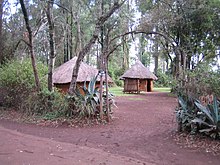
Photo from Wikipedia - traditional Luo village

One Book/One Community 2008


This year, One Book/One Community will be joining Bard College to celebrate the 50th anniversary of the publication of Chinua Achebe’s classic Things Fall Apart.

One Book/One Community 2008 Schedule

Tuesday, Feb 26 at 8 PM A TRIBUTE TO CHINUA ACHEBE

Presented by the Pen American Center, at Town Hall, 123 West 43rd Street, NYC Nigerian writer Chinua Achebe is joined by Toni Morrison, Chris Abani, Chimamanda Ngozi Adichie, Edwidge Danticat, Suheir Hammad, Ha Jin, and Colum McCann for this exciting anniversary tribute to Things Fall Apart (1958) -- one of the first African novels written in English to receive global critical acclaim. The evening features a special performance by the Francesca Harper Dance Project with dancers from the Alvin Ailey School. Presented in collaboration with Vintage Books.Ticket Price: $15 available at Ticketmaster

**********

Thursday, March 27 at 7 PM ACHEBE, CONRAD AND IMAGES OF AFRICA IN THE WEST

Explore two literary classics on African themes: Chinua Achebe's Things Fall Apart and Joseph Conrad's Heart of Darkness with a panel of Bard and SUNY Ulster Professors - Vanderlyn Hall, Student Lounge, Ulster Community College. Free

**********

Saturday, March 29 1:30 PM MODERNITY & TRADITION IN AFRICAN LIFE

The clash of civilizations will be discussed by Professors Wendy Urban Mead and Myra Young Armstead - Poughkeepsie Library Auditorium, 105 Market Street, Poughkeepsie Free

**********

Thursday, April 3, 12:30 PM LISTENING TO ACHEBE'S WORDS

Nicola Sheara will read passages from Things Fall Apart. A light lunch of salads and desserts will be provided by the AAUW - Kingston Library, 55 Franklin Street, Kingston, Free

**********

Friday, April 11, 7:00 PM A PREMIER WORK OF LITERATURE TURNS 50

Panel Discussion with: Chinua Achebe and Jesse Shipley, Bard College; Amadiume, Dartmouth College; Simon Gikandi, Princeton University; Christine Griffin, Red Hook High School; Moderator: Gretchen Holbrook Gerzina, Dartmouth College. Sosnoff Theater, Richard B. Fisher Center for the Performing Arts, Bard College, Free

**********

Tuesday, April 15, 1:00 PM Kingston AAUW Book Club

The Book Club will discuss Chinua Achebe’s Things Fall Apart, Kingston Library

**********

Sponsored by SUNY Ulster, Bard College and the Kingston chapter of the American Association of University Women

Funding provided by the New York Council for the Humanities (any views, findings, conclusions or recommendations expressed in this program do not necessarily reflect those from the National Endowment for the Humanities)